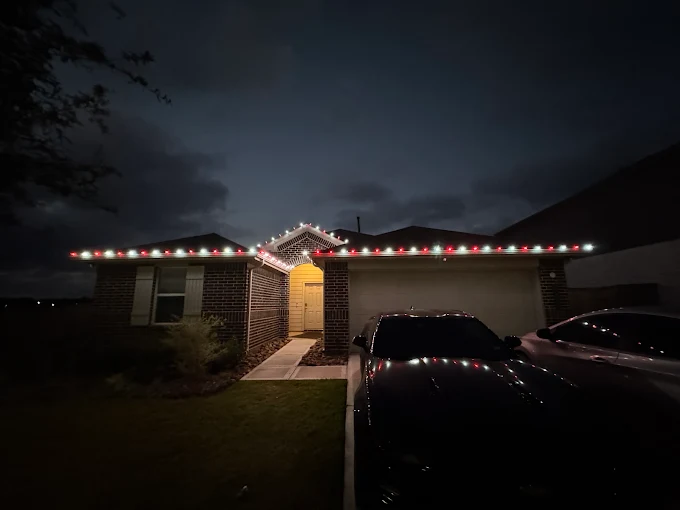
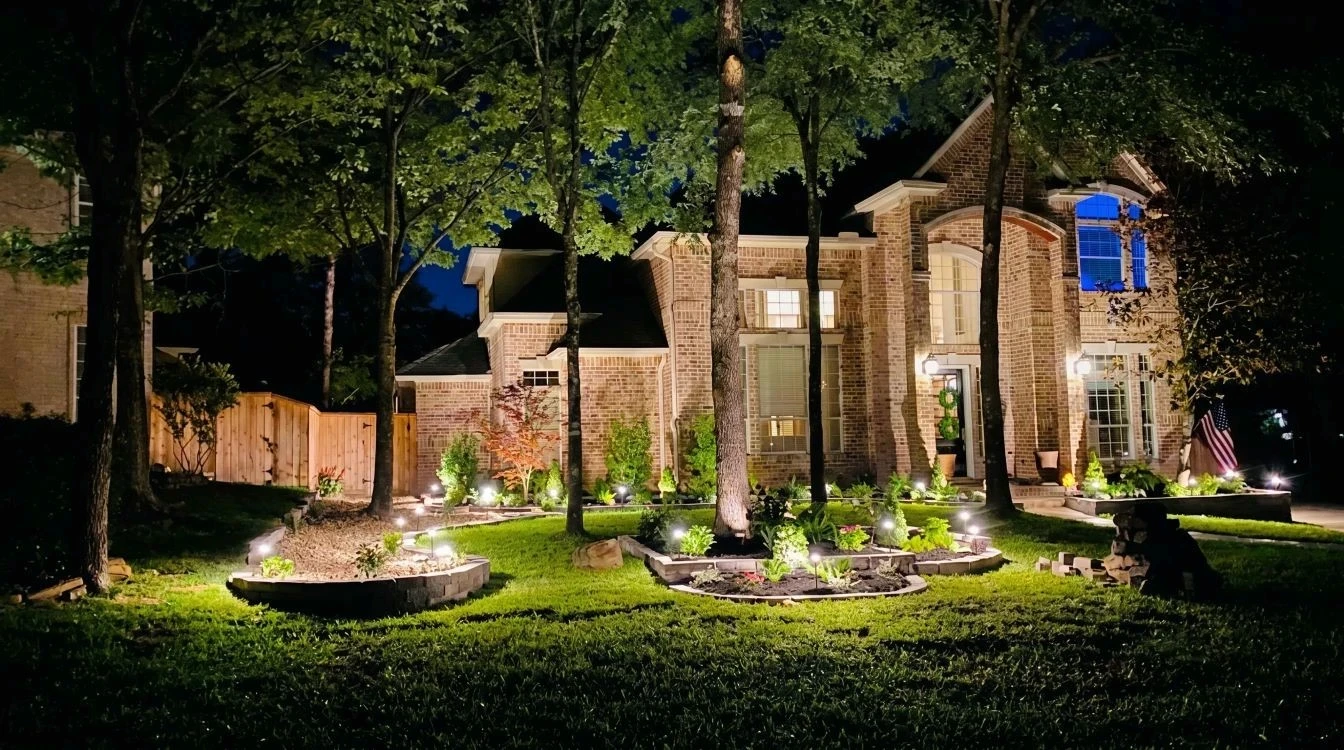
The best starting point for Christmas lighting ideas in Magnolia, TX is deciding what you want people to notice first. A roofline can frame the house, a decorated tree can become the main attraction, and walkway accents can bring the display closer to the front door.
You do not need to light every part of the property. Choose a main feature, repeat a consistent color or lighting style, and add supporting details where they contribute to the view.
Whether you prefer a simple white outline or a colorful display across the front yard, the following ideas can help you plan decorations that work together.
"Contacted this company to do our Christmas lights because I was impressed with how professional of a job they did for my mom. Within a few days of me contacting them they were out here hanging lights exactly the way we discussed. Couldn’t have asked for a better company to work with."
Ryan Michels
Google Review
Start With the View of Your Home
Before choosing individual decorations, look at your property from the places where the display will be seen.
For a Magnolia home near the street, the front roofline and entry may be visible together. On a property with a longer driveway or trees between the house and road, the view changes as someone approaches. A decoration that looks prominent from the porch may disappear when seen from farther away.
Think about three viewpoints:
From the street: Which parts of the house and landscape are visible?
From the driveway: What comes into view as you arrive?
From the front walk: What will guests see near the entrance?
Choose which view matters most to you. If you mainly want to enjoy the display when coming home, the driveway approach may deserve more attention than the street view.
Take a few photos from those positions. Use them to identify a main feature and one or two supporting areas. That gives an installer a clearer starting point than a list of decorations with no planned placement.
Creative Reflections offers holiday light installation for rooflines, trees, landscaping, and outdoor spaces in Magnolia and surrounding communities. Share the views you want to highlight when discussing your layout.
Use Roofline Lighting to Define the House
A roofline outline gives the display a clear shape. It follows the architecture already there, making it a useful starting point when you want a coordinated appearance without decorating the entire yard.
The main decision is which roof edges to include.
A simple front outline
Lighting selected front-facing roof edges can suit a homeowner who wants a restrained display. The house remains the focus, and you can add an entry feature or tree without changing the basic design.
Ask the installer to show where the outline begins and ends. A deliberate stopping point helps the display look complete even when only part of the house is decorated.
Rooflines with selected peaks
If your home has prominent gables or a tall entrance, ask whether highlighting those features would add useful shape to the display.
You do not have to outline every upper edge. Consider which peaks can actually be seen from your preferred viewing position. Access and installation requirements also need to be evaluated before the layout is finalized.
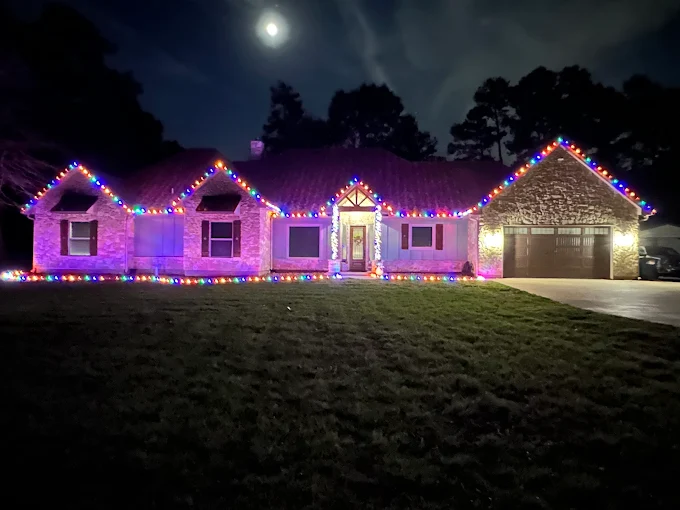
A roofline that continues around a visible corner
For a home approached from the side, a front-only outline may leave a large part of the arrival view undecorated. Extending the lighting around a visible corner is one option to discuss.
Keep the scope specific. Mark the roof sections on a photo rather than relying on a phrase such as “light the front.”
Choose Trees and Shrubs That Support the Display
Landscape lighting adds another layer beyond the house. It can draw attention to a feature near the entry, balance a broad front elevation, or create something to enjoy from a window.
Start with the trees and shrubs you already have. Their placement and shape should guide the idea.
Make one tree the focal point
A single decorated tree can give the yard a clear point of interest. This may suit a property where the tree is visible beside the house or near the driveway approach.
Ask the installer to explain the proposed treatment. Trunk lighting, selected branch lighting, and a fuller canopy display produce different appearances and involve different scopes.
Bring a reference photo, but be open to a layout that fits the actual tree. A design photographed on a small ornamental tree will not translate directly to a large, spreading tree.
Repeat lighting across a small group
If several trees or shrubs already form a clear group, repeating a similar treatment can connect them visually.
The plants do not need to be identical, but the lighting should have something in common: color, spacing, or the portion of each plant being decorated.
Ask whether the group should be treated as one feature or whether selecting fewer plants would create a clearer result.
Leave room between decorated areas
Unlit space gives each feature room to stand out. Decorating every shrub may blur the difference between the main attraction and the background.
Before adding another area, ask what it contributes to the overall view. It may be more effective to strengthen one focal point than spread the display across the whole yard.
Connect Walkways and the Front Entry
Roofline lighting is seen from a distance. Walkway and entry details are experienced closer to the house, where guests arrive and the family comes and goes.
Use those areas to carry the display toward the front door.
For a straight front walk, repeated accents may provide a clear visual connection. For a curved path, selective lighting along nearby planting areas can follow the approach without outlining every edge.
Discuss placement with the installer so decorations and their connections work around the way the property is used. Show where doors swing, where people step out of parked cars, and where deliveries are normally placed.
At the entrance, a wreath, garland, or another feature could act as a finishing detail if the installer offers it. Choose its scale with the doorway and surrounding lighting in mind.
A small entrance may need only one accent. A wider porch may allow a repeated arrangement, but it still helps to choose a clear center of attention.
Keep existing functional lighting in the conversation. Porch lights, step lights, and permanent landscape lighting will be part of the nighttime view. Plan seasonal decorations alongside them rather than assuming they will be turned off.
Pick a Color Direction Before Adding More Features
Color is one of the simplest ways to connect rooflines, trees, and walkway accents.
Choose an overall direction first, then ask which available products can produce it.
Design direction | One way to arrange it | Detail to discuss |
|---|---|---|
Warm white | Repeat the same white tone on the roofline and a selected tree | Compare product samples so the whites look consistent |
Red and white | Use a repeated pattern on the house with a simpler landscape treatment | Agree on the pattern before installation |
Multicolor | Carry a consistent mix across selected features | Check that existing and supplied lights work visually together |
White with a color accent | Keep the main outline white and reserve color for one focal feature | Choose where you want attention to land |
These are design starting points, not fixed packages or promises about product availability.
If you like white lighting, avoid relying on the word “white” alone. Ask to see the proposed color. Different products can look noticeably different when placed side by side.
Existing porch and landscape lights also affect the overall appearance. Share an evening photo if possible so the discussion includes the lighting already on the property.
You can combine colors successfully without using them everywhere. Repeating one accent in two selected areas may be enough to connect the house and landscape.
Turn Your Favorite Ideas Into One Clear Plan
Reference photos help, but several attractive examples can point in different directions. One may emphasize a roofline, another a tree canopy, and another a heavily decorated porch.
Choose what you like about each image. Is it the color, the spacing, the amount of coverage, or a particular feature? That explanation helps the installer adapt the idea to your home.
Build a short design brief:
Main view: Where you want the display to look its best.
Main feature: The roofline, a tree, or the entry.
Supporting areas: One or two places that connect to the main feature.
Color direction: Your preferred palette and any existing lights.
Must-have details: The elements you do not want to leave out.
Optional additions: Features to price separately.
Practical constraints: Access, outlets, parking, and areas that must remain clear.
If you are unsure how much to include, ask for a core layout and a few optional additions. Seeing those choices separately makes it easier to decide where more decoration adds value.
Before approving the plan, review it from your chosen viewpoint. Each decorated area should have a purpose, whether that is defining the house, highlighting a tree, or welcoming guests at the door.
Plan Christmas Lighting for Your Magnolia Home
A coordinated display starts with a few clear choices: what to highlight, which colors to repeat, and how the house and landscape will work together.
At Creative Reflections Landscape & Maintenance, we offer holiday lighting for Magnolia homes and outdoor spaces. Share your reference photos, preferred viewing areas, and must-have features so we can discuss a design for your property.
Contact Creative Reflections to discuss your Christmas lighting ideas and ask about available options and scheduling.
Questions About Planning a Christmas Lighting Display
Can a smaller home have a complete-looking display?
Yes. A display can feel complete when it has a clear focus and consistent details. Start with a selected roofline or entry feature, then decide whether another element improves the composition. There is no need to fill every available space.
Does the lighting need to be symmetrical?
No. Symmetry can work well around a centered entry, but an off-center tree or garage may call for a different arrangement. Judge the whole view rather than trying to place matching decorations on both sides of the property.
Can decorations look good during the day, too?
Yes, but evaluate both appearances. If wreaths, garland, or freestanding decorations are part of your plan, ask how they will look in daylight as well as after dark. Review visible supports and connections with the installer.
Can I expand the display in future seasons?
You can plan with future additions in mind. Tell the installer which areas you may want to decorate later and ask how that affects product choices and the layout. Confirm future availability and compatibility rather than assuming an exact match will always be available.
Blogs